INDUSTRY:
Academic
WORK:
Topology Optimization, Mechanical Design
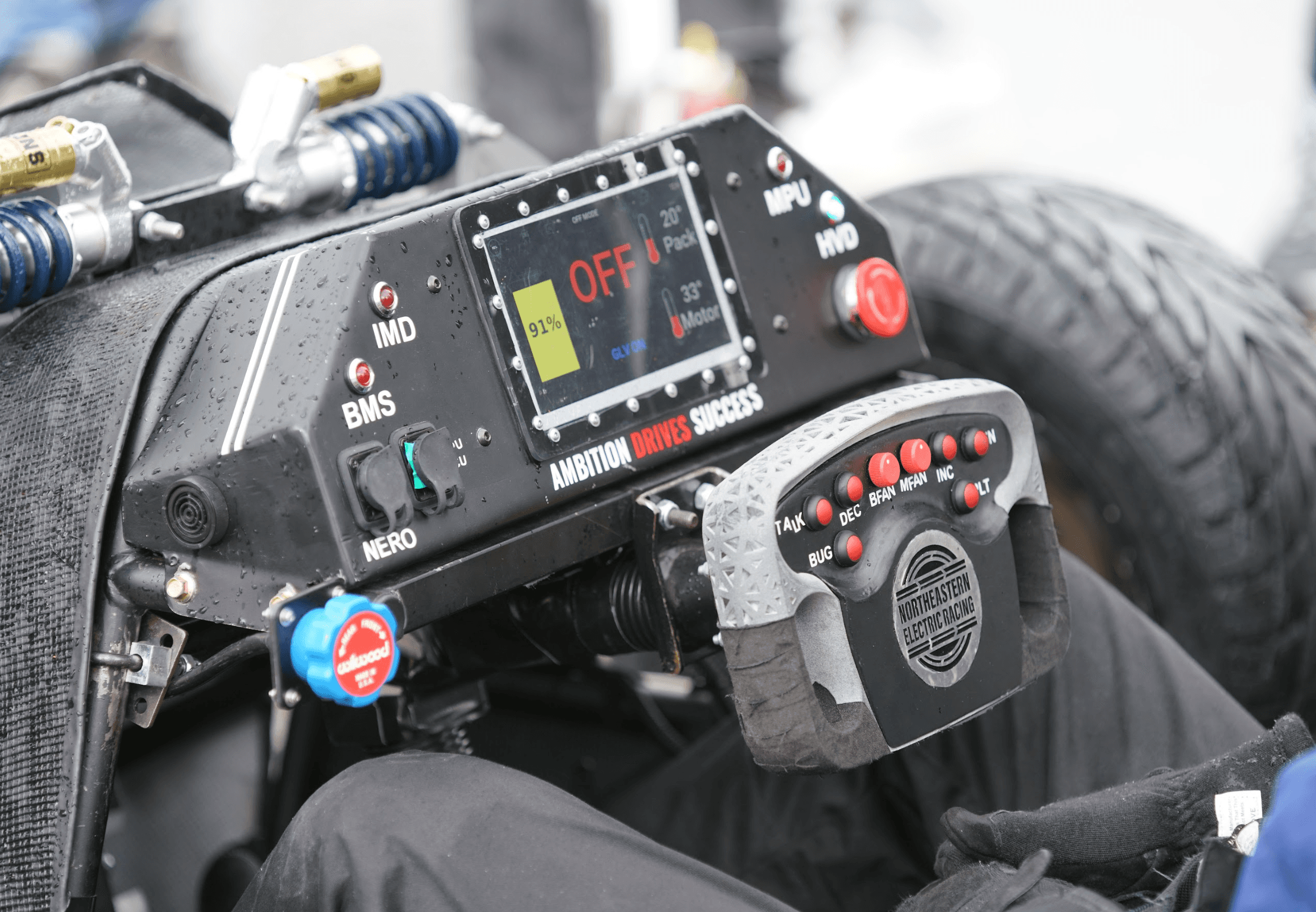
FSAE Lightweighted Steering Wheel
about.
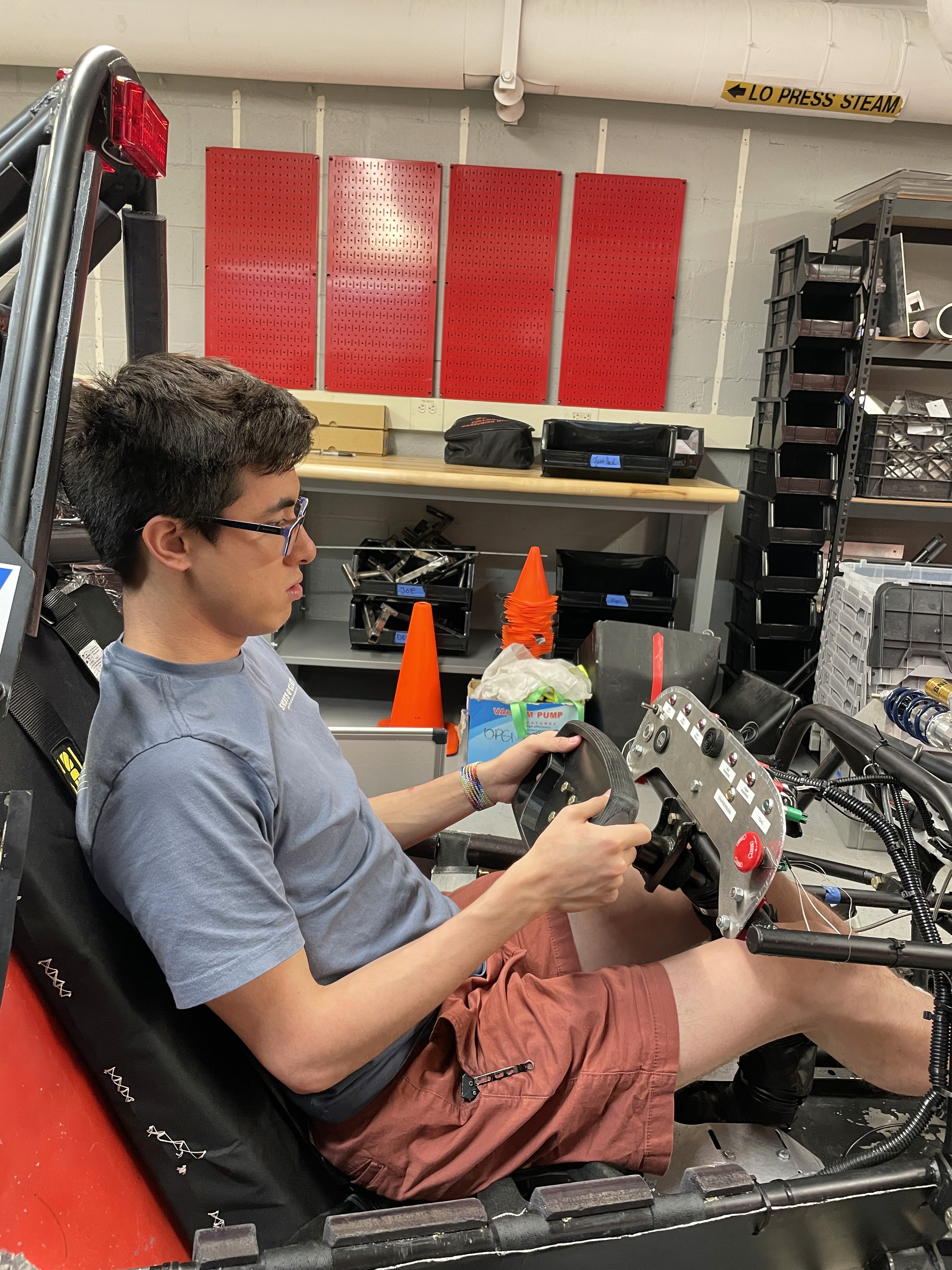
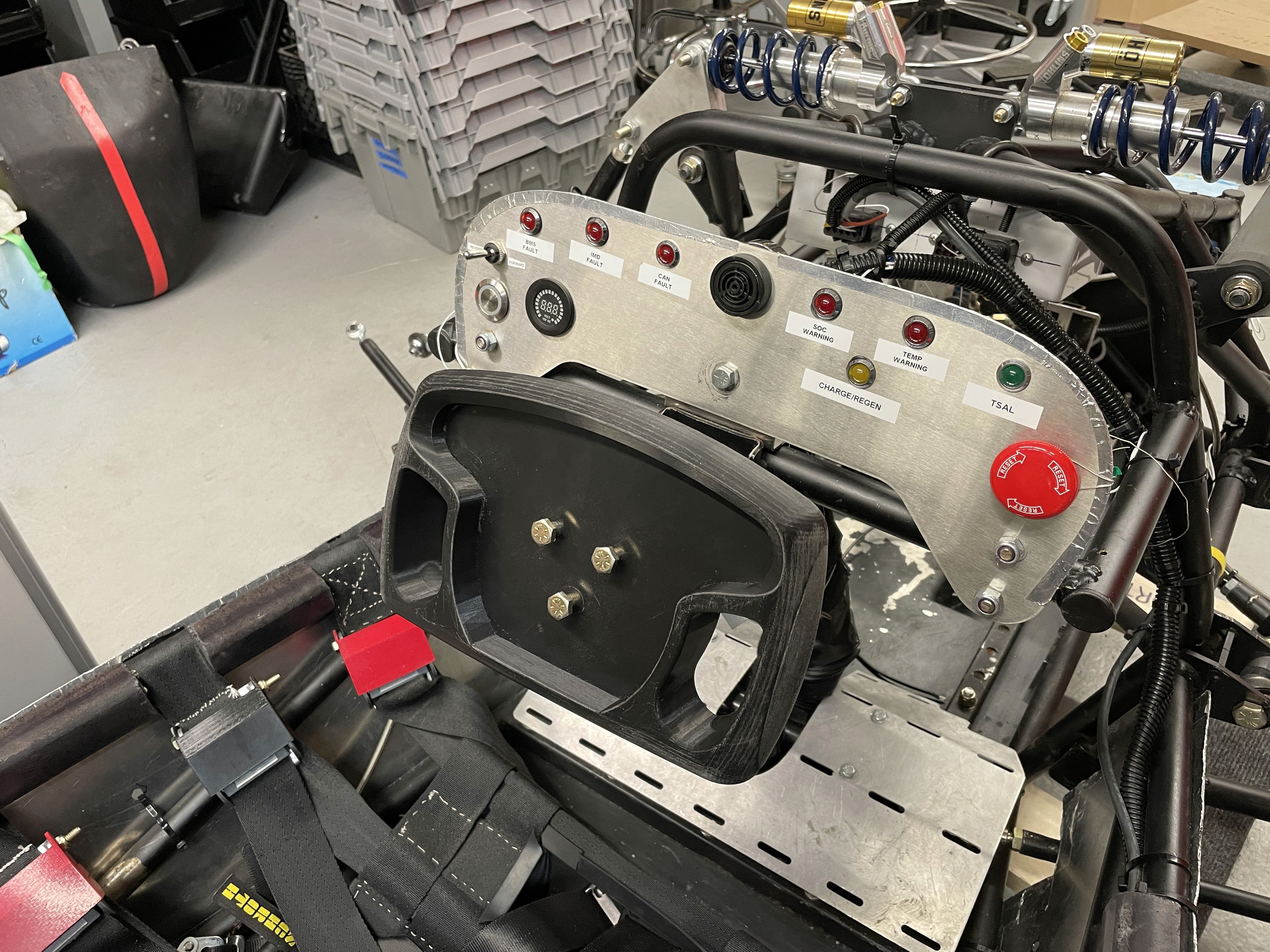
As part of the first generation of students at Northeastern to participate in Formula Hybrid (and subsequently FSAE), we had the benefit of starting with a blank slate and no expectations. That also meant a limited budget that mostly went towards things that made the car move. After our first year of competition with a random steering wheel that was found in a garage somewhere, the electrical team decided that the driver cockpit needed a full overhaul. The original vehicle had a on/off button, a switch to toggle between "drive," and "reverse," and some LED's to display principal failures. Any control or viewing of data had to be done with a laptop connected with a cable to the LV system.
execution
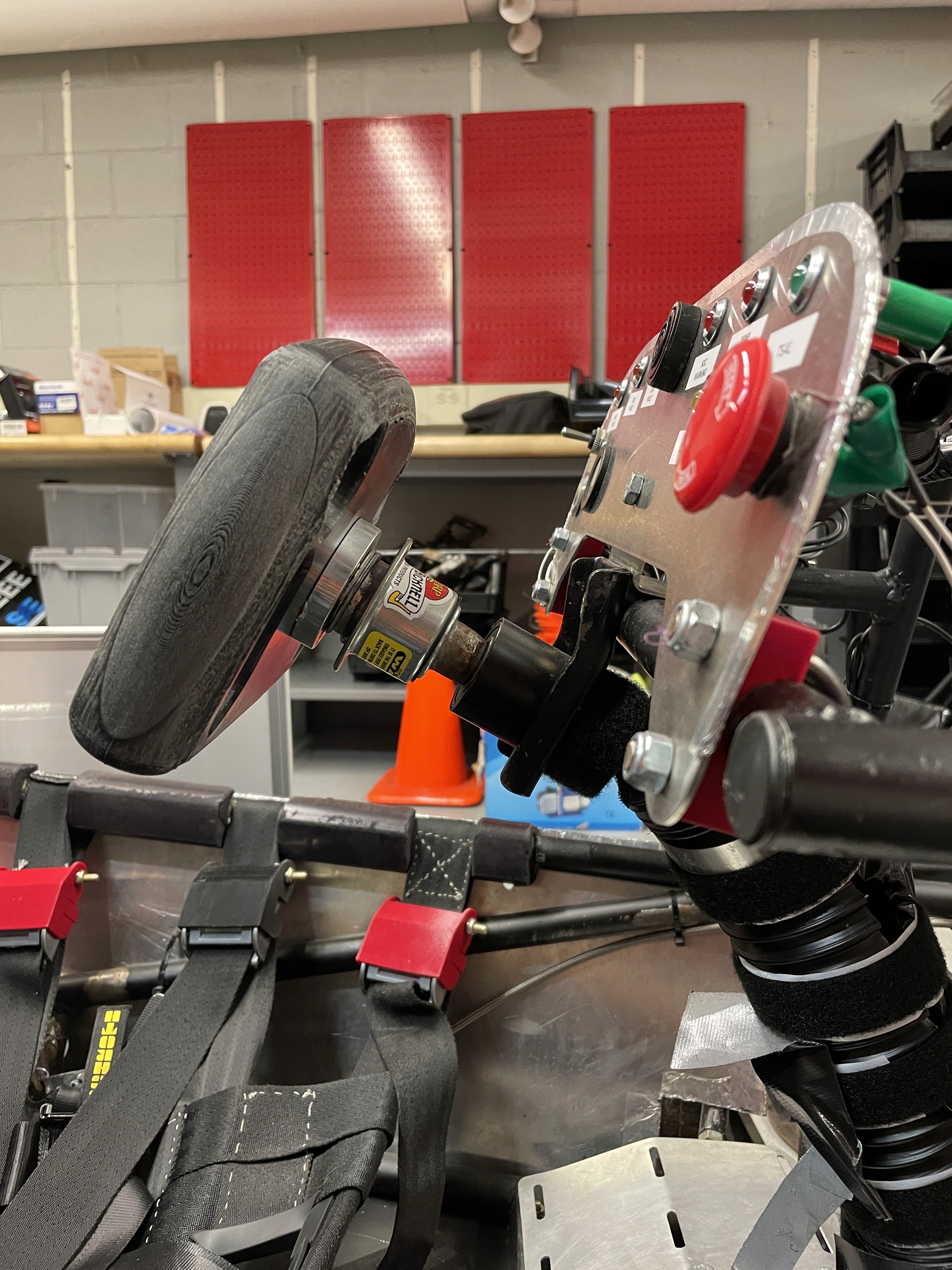
Since the team's general strategy was to invest in extensible parts that can be used in future years, the vast majority of the project's budget went towards purchasing a 7 wire quick disconnect that could be used for connecting the vehicle control and display with the rest of the LV system.
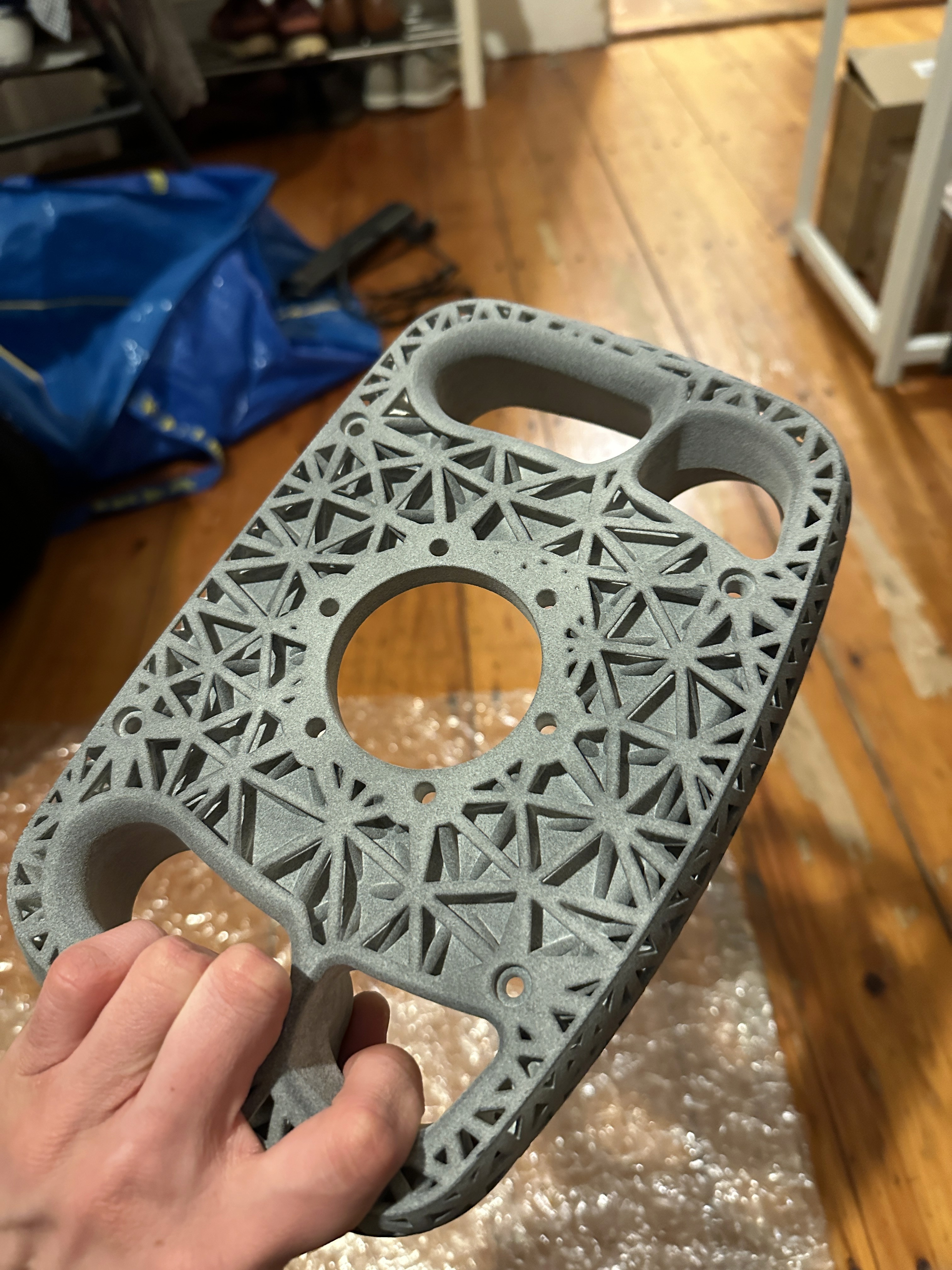
So why does did I pursue an MJF PA-6 solution? It gave the electrical team the most space, allowed us the most room to play with ergonomics, it looks cool, and is a challenging print. This gave us the best chance of securing a sponsor to take on the challenge of printing the part. The steering wheel is also one of the most prominent parts of the vehicle which makes it a good place to show off; something we knew was critical to get Northeastern's administration to pay attention and give the club more funding.
The center "tub" was intentionally left modular with options for finger through holes, space left for thumb buttons, and even a display if the team wanted to pursue it. Since the electrical development lagged the mechanical development, modularity was critical.
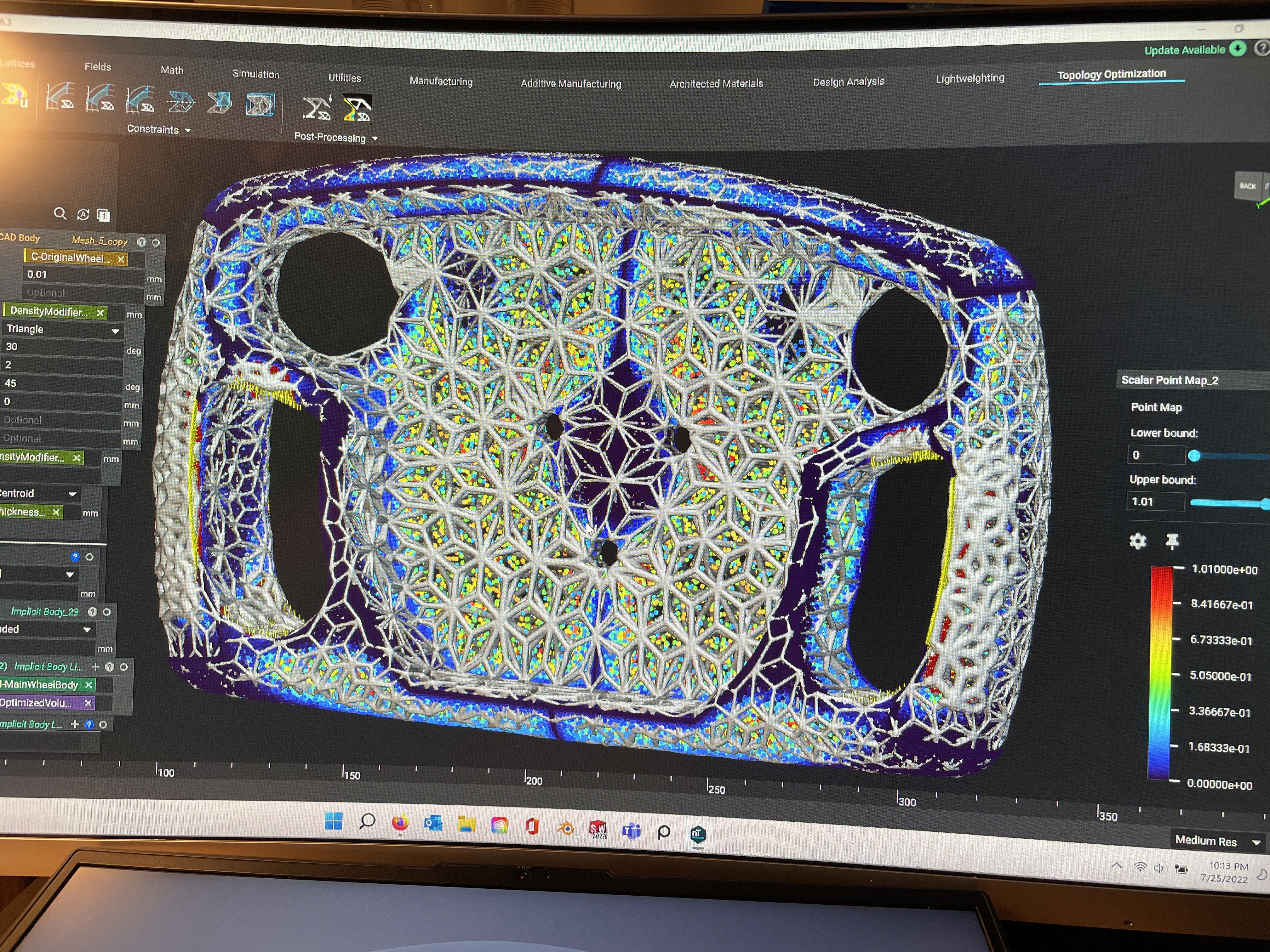
The surfacing was done with Onshape while the latticing and simulation was done in nTop.